
RICHTWERT Co-Investor Letter 2025/2026
“Adapting is crucial for survival, but competitive advantage is what determines profitability!”

PERFORMANCE


Dear Partners & Co-Investors,
Since the founding of RICHTWERT in 2014, every year has been eventful with significant market swings:
2014: Russia annexes Crimea; oil price collapses ~50% due to booming U.S. shale production and OPEC’s refusal to cut output
2015: Chinese stock market crashes ~40%; Greek debt crisis
2016: Brexit; Trump elected U.S. President
2017: North Korea missile tensions
2018: U.S.–China trade war begins; sharp 20% market selloff in Q4
2019: Hong Kong protests; U.S.–China trade war escalation
2020: COVID pandemic; markets fall ~35% in five weeks; oil price turned negative
2021: Inflation returns and reaches 7%; China cracks down on education and technology sectors
2022: Russia invades Ukraine; oil nears $120; fastest rate hikes in 40 years; markets fall 20–40%
2023: U.S. regional banking crisis (SVB, First Republic cease to exist)
2024: Trump elected for a second term; Middle East escalation
As I highlight in What Happened During the Last 12 Months, 2025 and 2026 didn’t disappoint in terms of eventfulness either.
We, too, have had our ups and downs over the years, and despite all of this, you have trusted me with your savings and capital to distinguish between noise and signal, to manage risk and to invest for the long-term the way I invest my own net worth. You are truly exceptional, and I am delighted to have you as my partners!
Now that we’ve been on this journey together for more than a decade, you may want to know how I have evolved the way I invest our capital.
During the first three years of RICHTWERT, I invested in businesses that were out of favor and ranged anywhere between average to great in terms of quality. These investments generated attractive returns for us, but I realized that the subset of great businesses was what carried much of our performance. Nearly all of the medium-quality businesses I invested in in the hope of a turnaround either did not or took too long to turn around. Bank of America was the only exception to the rule that contributed meaningfully to our success.
Therefore, ever since 2017, I have gravitated more towards higher-quality businesses, even if that meant we had to pay more for them. Given their strength, these businesses were usually not out of favor but rather underappreciated and therefore available for purchase at attractive valuations. In turn, our performance has improved over time.
From time to time, however, these outstanding businesses (I wrote about Apple, Blackstone, Facebook/Meta in my 2018/2019 letter and about Brookfield in my 2023/2024 letter to you) were viewed with excessive pessimism and presented excellent opportunities from which we benefited greatly.
Today, I believe we are in a similar situation where some of our largest investments are out of favor and significantly undervalued. If anything, the last 11 years have taught me to expect many surprises and challenges on the one hand but also to be even more optimistic on the other hand knowing that we are co-owners of some of the best businesses ever created — businesses that benefit in good but even more so during challenging times. Looking ahead, I believe the best is yet to come!
In this year’s letter, I cover how our investments performed in the stock market and contrast that with how the businesses themselves performed. In addition, I reflect on what happened during the last 12 months, share my views on how artificial intelligence is impacting the world and what I believe we may and may not expect looking forward. Finally, I detail how I have positioned us for the future.
Investment Results Measured by theStock Market vs. Business Performance
Performance Overview 2025 | EUR | CHF | USD |
Performance measured by the stock market (before profit share¹) | 16.4% | 15.3% | 31.2% |
Performance measured by business performance | ~ 6% | ~ 5% | ~ 20% |
Although three of our largest investments were irrationally punished in the stock markets in the 4th quarter, our stocks performed well in 2025: 16.4% in EUR, 15.3% in CHF and 31.2% in USD.
The performance delta in USD vs EUR/CHF was not due to different strategies, but to the US Dollar declining vs the Euro and the Swiss Franc in 2025.² RICHTWERT only manages one strategy because I am not in the business of managing as much as possible to maximize fees but rather in the business of investing as well as possible for us.
The main drivers of our performance were our ecosystem businesses, followed by our asset management and specialized financial services and (AI) infrastructure businesses.
The businesses themselves also performed well, but the growth in intrinsic value was around 10% less than their stock performance. The reason was other investors realizing that our businesses were significantly undervalued and being keen to pay more to become co-owners like us. As you can see from Chart 1, despite the strong stock performance in 2025, the growth of our stocks (dashed blue line) was still below the growth in intrinsic value of our businesses (solid green line). I estimate our portfolio was still approximately 27% undervalued at year-end (237.4 / 326.9).
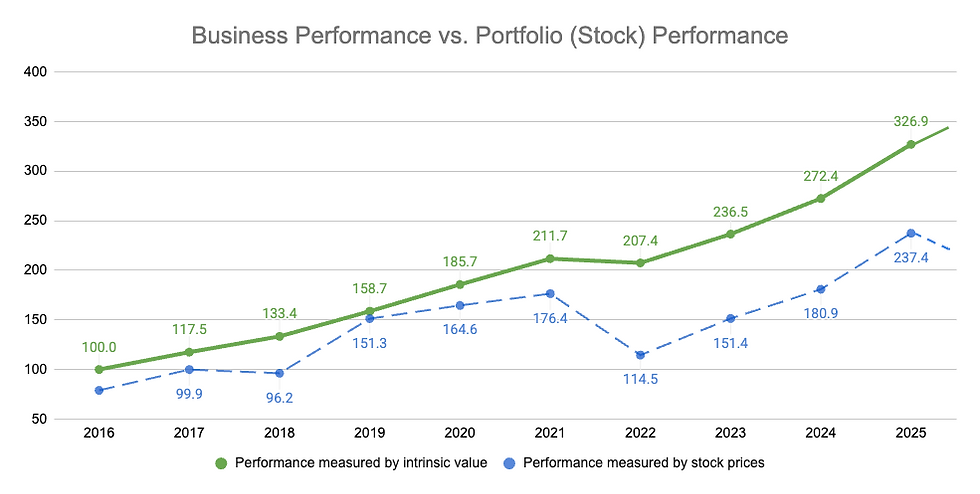
Chart 1: Performance measured by the stock market vs. measured by business performance (in USD)
The reason why the gap widened markedly in 2022 was that stocks of grenke, HelloFresh, and Meta declined around 40%–70% in that year. While the selloff in Meta proved to be a clear overreaction and Meta subsequently recovered much more than it had lost in 2022, grenke and HelloFresh continued to face both headwinds as well as subpar performance by their management.
Mistakes I Made
My mistake with HelloFresh was twofold:
First, I believed management would capitalize on the potential of HelloFresh’s business model, which would create value through three main pillars:
Vertical Integration: Controlling 70% to 80% of the value chain, from direct farm sourcing to final doorstep delivery of meal kits and ready-to-heat meals.
Demand Predictability and Flexibility: Utilizing customer pre-orders and a limited number of SKUs relative to supermarkets to maximize purchasing power and drive down cost, while using dynamic menu design to easily steer demand away from ingredients that become too expensive.
Operational Synergies: Combining the marketing, ordering, and logistics of both the meal-kit and ready-to-heat businesses to drastically cut marketing and delivery expenses.
Second, I believed that consumers who learned about HelloFresh and its convenience during the COVID pandemic would be more likely to continue with HelloFresh for some of their meals after the pandemic.
The fact that HelloFresh’s management did not deliver on my first belief contributed to the fact that many families returned to the way they purchased groceries before the pandemic.
My efforts to convince HelloFresh to pivot their strategy were not successful, and I decided to correct my mistake by selling our HelloFresh investment in January 2025 at a loss to reinvest elsewhere.
The situation with grenke, however, is different. The business was hurt by the pandemic and by an unfounded short-seller attack, which put grenke’s management under significant pressure and caused them to fight fires. grenke decided to restructure parts of the business and has become more capital intensive and less entrepreneurial. As a result, it has not gained as much value as it could have. Notwithstanding this, the business remains significantly undervalued. My expectation for the company’s stock to revalue faster towards intrinsic value has so far proven too optimistic, which has partly contributed to the gap between stock and business performance of our portfolio.
Then Came 2026
In Q1 2026, our stocks declined 20%, recovered 7% in April and stayed flat in May. As was the case in Q4 2025, the price declines were concentrated in our undervalued high-quality businesses that I value greatly (also see November 2025: My Wish Was Granted). Therefore, I am not only not worried by the price decline but instead delighted because we get to own more of these outstanding businesses at a lower price. Allow me to explain:
You have heard me often say: “Price is what we pay, value is what we get!” The two can, and regularly do, diverge significantly. Today, the gap between price and value across our portfolio is roughly 40%, and grenke, which is only a medium-quality business, is only about 5% of that. This means even if grenke’s stock were to never approach its current intrinsic value — which I believe it eventually will — the remainder of our portfolio of very strong businesses is still 35% undervalued. In fact nearly 80% (65% + 14%) of our portfolio is being valued at or below its lowest point during the last decade which included BREXIT, trade wars and COVID. This makes me even more optimistic about our future returns today than at year-end.

Chart 2: RICHTWERT Portfolio valuation vs. lowest point of valuation during last decade
Consequently, I have personally been investing more in our portfolio at RICHTWERT and recommend the same to everyone looking to earn attractive returns while keeping risk under control. I am confident we will be well rewarded in the fullness of time.
What Happened During the Last 12 Months
April 2025: New and Expanded Tariffs
Donald Trump announced sweeping new tariffs that triggered widespread concern about a global trade war. In Tariffs, Power Plays, and the Long Game — A Rational Investor’s Take on the Global Chessboard, I argued tariffs are a real cost, but they are noise rather than signal if you are invested in strong businesses like the ones we own at RICHTWERT. Their financial strength, diversification, pricing power and management quality allow them to absorb, adapt to, or even benefit from such shocks.
My job at RICHTWERT is to focus on the few strong businesses I can understand and value, and to invest when we can become owners in them for less than my estimate of value. The larger the gap between value and price — and the more confident I am about my estimate — the larger I’ll make the investment.
Company A, primarily held via Company B & Company C, was a textbook example. On March 20, 2024, I wrote to RICHTWERT partners:
“Our largest investment reported annual results today. Our business has a leading position and significant competitive advantages in not just one but five industries. Its services are still intentionally undermonetized and therefore present a long runway for profitable growth.
Despite all this, the market values this business at a fraction of what it is worth. And due to some special circumstances in the stock market, we have been able to invest in it at an even greater discount.
In 2023, it increased its profitability by 34%, its dividend by 42% and its share repurchases by 47%. In 2024, it plans to increase share repurchases by more than 100%. It generated $24 billion of free cash flow and owns an investment portfolio valued roughly at $130 billion apart from its own operations.
What was the market’s reaction to these results today, you might ask? The answer was a big and indifferent yawn. One major reason is that our business operates in China.
I could not be happier that investors are so pessimistic, because we can increase our ownership in this outstanding business at a fraction of its true value — through our own purchases and the company’s share repurchases on our behalf. In the fullness of time, the business will likely be valued significantly higher, paying us rich ‘dividends’ for our patience and willingness to ignore noise.”
Eighteen months later, despite intensified global trade wars, investors valued Company A, and with it Company B and Company C, at more than twice as high!
July 2025: RICHTWERT Ranked 3rd Best Global Value Fund
In July, our fund was ranked 3rd best out of 297 global value funds. I was gratified, not by the ranking itself, but by the confirmation that my focus on exceptional businesses purchased at attractive valuations, held with conviction and patience, produces exceptional results for us.
The increase in price during this period was strongly backed by business fundamentals — relative to their earning power, our businesses, including Company B, Company C/Company A, had not become expensive. They still remained undervalued but less so than before.
Consequently, I partially reduced our investments in Company B, Company C and Company A in favor of other investments. Moreover, I stressed that I preferred our stocks to remain flat or decline, because I like what we own and prefer to buy more at lower prices.
October 2025: AI Became Agentic
Anthropic released Claude Code, an AI agent that writes, tests and implements code. Soon after, an open-source project called Clawdbot, later renamed OpenClaw, a self-hosted, model-agnostic AI agent/assistant that runs continuously in the background, communicates with users via messaging apps and gets things done for users even when they sleep — went viral.
With these advances, AI evolved from intelligent chatbots to intelligent agents that act. The pace of progress has been extremely fast and is accelerating. I will return to what this means for investing in What We May and May Not Expect Looking Forward.
November 2025: My Wish Was Granted
Then, in November, my wish was granted. Company C finally did what I had been publicly asking them for three years: they moved from an automatic share-repurchase program — where they sold parts of their investment in Company A to repurchase their own shares and with that also Company A at a discount — to a more opportunistic approach — where they would also consider alternative ways to fund the share-repurchase program if those made more sense.
Investors, who preferred the predictability of the automatic program, sold Company C, causing the stock to fall. Admittedly, the automatic share-repurchase program made sense, but it was not optimal. Evaluating all available options to finance the share repurchase program makes more sense. And now that Company C’ stock has fallen significantly, the share repurchases have an even larger positive impact.
I love when management teams have the courage to do what is right even if it is unpopular with most investors. It is what allows us to own more of the businesses I value greatly at lower prices. So while this continues to put significant pressure on our performance in the short term, we are better off for it in the medium and long term, which is the time horizon we care about. And yes, I have increased our investment in Company B, Company C and Company A again.
February 2026: Software as a Service/Business Declared Dead
A report titled THE 2028 GLOBAL INTELLIGENCE CRISIS presented a detailed scenario in which AI agents would, over the following two and a half years, hollow out white-collar employment, collapse the Software as a Service (SaaS) industry, disrupt intermediation across travel, payments, retail and real estate, and propagate through private credit, insurance and ultimately the residential mortgage market.
The report raised important possibilities and risks that deserve to be taken seriously. To the authors’ credit, they stated that they were modeling a scenario, not making a prediction. But the scenario presented is a deeply one-sided portrayal that I believe is short-sighted because it does not reflect how the world works. The market, however, reacted as if the scenario was highly likely.
Interestingly, I had warned investors five years ago to be cautious because high-flying companies were then priced for perfection, leaving little to no margin of safety. In April 2026, some of the same businesses in areas such as software, services, and financials generated 3–6 times the cash flows they did back then, but their stocks had declined by 50–80%!
While AI-caused disruption is an important threat, I believe the narrative has been too simplistic and undifferentiated. More on that in What We May and May Not Expect Looking Forward. In my view, some babies were being thrown out with the bathwater.
Safe to say: Margin of safety had returned for rational investors who understood and could value businesses. I was able to identify and invest in two software businesses with lasting competitive advantages that stand to benefit from AI, at prices that provide us with a good margin of safety. I hope their stock prices fall further so that we can own more of them.
February 2026: War in the Middle East
On the last day of February, war broke out in the Middle East. This human tragedy has cost countless innocent lives, torn families apart, and destroyed livelihoods. I myself have family and friends in the region and hope the war ends soon and well.
From an investment perspective, stocks typically fall when wars break out. Nobody knows how far or when the bottom is reached. Given our time horizon, we benefit because wars accelerate economic activity in countries not destroyed by them over time — at least in nominal terms.
People who own productive assets are well protected because these provide inflation protection. Owners of businesses with competitive advantages benefit disproportionately, because these firms can invest in talent, R&D, products, marketing, and the acquisition of weaker competitors when others cannot. Those whose savings are held in cash, or those without savings, are unfortunately hurt by inflation and bear the burden.
What We May and May Not Expect Looking Forward
Now that all of our businesses and their competitors have reported on their achievements for 2025 and communicated what they plan to do, three trends have become increasingly clear:
AI is having an even greater impact than almost everyone expected.
The rate of progress keeps increasing: LLMs → LLMs that can reason → Agents that learn (self-improve), act, and coordinate with other agents in the digital world → Agents that do the same in the physical world.
Demand for AI capability & capacity continues to exceed supply for the foreseeable future.
These trends go hand in hand with the debate over whether we are in an AI bubble. Some remember the bursting of the Internet bubble and draw parallels. In my view, there are significant differences but also some similarities.
During the Internet bubble, many Internet firms did not have customers or sales, never mind profits. Today, numerous important businesses could not operate the way they do without AI. AI-empowered revenues are substantial and growing fast. Tokens, the currency unit of AI, have turned profitable, meaning that even though some prominent AI companies are still loss-making, their unit economics have turned positive, allowing them to become profitable with more scale. Additionally, AI infrastructure firms are extremely profitable and growing very fast. Another striking difference is that while the Internet era was very capital light, the AI era is vastly more capital intensive — an important difference I will return to when detailing how I have positioned our investments. What is similar, though, is that AI businesses have high valuations and that some AI firms are priced for perfection or more!
In my view, we are still at the beginning of AI’s potential. As useful as AI has proven to be, it still requires a lot of expertise from users to ask the right questions, provide the right context, and critically evaluate the results and iterate. There is still a lot of room for improvement and its use will only increase as it gets more capable. The demand for intelligence is practically infinite especially if it is differentiated.
I interact with many young entrepreneurs and early adopters. Like me, they are discovering AI’s potential and the landscape is changing very rapidly. Beyond these early adopters, there is at least 70–80% of the world population who still need to take initial steps with AI.
In conclusion, while I don’t believe we are in an AI bubble yet, some AI businesses are viewed and priced too optimistically and are likely to disappoint investors. Separately, given the pace of change and disruption, tomorrow’s AI winners may very well be different from today’s — threatening even those AI companies that are valued highly but not very optimistically. In addition, the U.S. economy is artificially fueled by very significant government overspending and deficits. Add the possibility that interest rates could rise not only due to irresponsible government spending but also because AI factories require enormous amounts of capital and one can easily see a future where high stock valuations could correct materially.
But Isn’t It Different This Time With AI?
Most investors rush towards innovation and change. I like innovation and change as a consumer but not nearly as much as an investor. Change makes things unpredictable — not just for us as investors but also for businesses. Many believe AI will make businesses more efficient, adaptive, and capable. That is certainly true, but none of that necessarily means businesses will become more profitable. Allow me to illustrate why:

Source: AI image produced by Google Gemini
When people at a music concert stand on their tiptoes to see better, hardly anyone sees better, but everyone eventually gets tired. The few that may see more — people in the first row and tall people — had an advantage to begin with! And therein lies the secret: Adapting is crucial for survival, but competitive advantage is what affects profitability!
In that sense, the report mentioned before was at least refreshing because it presented a scenario where productivity gains would lead to vastly lower profits. Admittedly, the report gets several things right: AI capabilities are improving fast. Many businesses built on monetizing human friction will be disrupted. White-collar work will change, but so will blue-collar work and all work for that matter. Some incumbent moats will erode. These are real possibilities and risks, and we should take them seriously.
What the report does not do is consider the other side. It traces a chain of reasoning in which AI displaces white-collar workers, those workers spend less, software demand collapses because there are fewer workers who will need software, and those who need software can just ask AI to create it, private-credit-backed software buyouts default on their loans, insurance underwritten by private-credit balance sheets cracks, residential mortgages fail, and the economy spirals downward.
Each step mentioned in the report is debatable on its own and far from certain. Stacked together, the scenario describes an economy in which only the negative consequences of a powerful new technology arrive — and none of the positive ones.
This one-sided skepticism regarding innovation mirrors an argument Charlie Munger addressed at the 2016 Berkshire Hathaway annual meeting, where he defended Coca-Cola against narrow criticisms. Shareholders criticized its long-standing investment in Coca-Cola by pointing only at sugar and obesity, while ignoring the pleasure and benefits the product provides to billions of consumers. Munger called the one-sided argument “immature and stupid” and continued that critics “shouldn’t be allowed to cite the defects without citing the advantages.” as well. So let’s reason through the risks and the possibilities next.
On the Risk of AI Displacing Workers
Throughout history, innovation was seen as a great danger by many. It displaced existing ways, created new ways, but always improved quality of life by providing people with more choice at lower cost:
Agricultural Revolution (~10,000 BCE)
Plows, irrigation, crop rotation → freed labor from subsistence survival; created food surpluses enabling specialization
Printing Press (1440)
Gutenberg → democratized knowledge; disrupted scribes and copyists; created publishers, typesetters, booksellers; enabled immense distribution of knowledge
Steam Engine / First Industrial Revolution (1760s–1840s)
Steam power, textile mills → displaced skilled artisans and cottage workers; created factory labor and massive productivity gains
Railroads & Telegraph (1830s–1860s)
Connected markets nationally → disrupted local monopolies; created entirely new logistics and communications workforce and empowered exchange of goods and services
Automobiles (1910s–1930s)
Ford's assembly line → replaced coachmakers, blacksmiths, stable hands; made personal transportation affordable, created auto workers, mechanics, oil industry, highway infrastructure jobs
(Personal) Computers & Automation (1950s–2000s)
Spreadsheets, word processors → eliminated most clerical and typing pool jobs; created knowledge worker productivity explosion
Internet, Mobile & Cloud (1990s–2020s)
E-commerce, digital media → disrupted retail, travel agents, newspapers, music industry; created E-commerce, platform economy, digital marketing not only for large but also small & medium enterprises, ride hailing, influencers, work mobility that allowed the economy to survive a pandemic
In my view, AI will disrupt workers who do not or cannot adapt, and we need new skill development programs to ensure this group is as small as possible. But AI will also enable us to be more effective and efficient, to do and achieve more with less. As long as AI has proper incentives to adhere to the collective human interest, the net effect will be vastly more choice and abundance for society. I believe Jensen Huang, Founder and CEO of NVIDIA is spot on in this regard.
Jensen Huang, Founder & CEO of NVIDIA. Source: World Economic Forum
In addition, we can see that as AI has improved at developing code, the number of job postings for Software Engineers has increased rather than decreased. In other words, when things get easier and more accessible, we tend to do more, not less.

Chart 3: Demand for Software Engineers vs. demand for other jobs. Source: Citadel Securities, Indeed.
On the Risk of Software Vendors Collapsing
Since we are not going to run out of things we want to do and achieve, the need for software will obviously increase because it allows us to automate work.
What has spooked investors and caused a strong selloff in the stocks of Software as a Service (SaaS) firms as well as motivated private credit investors to try and redeem their capital from alternative asset managers is the fear that companies will have fewer employees who would need software and that AI would just do everything we want, including developing the software it needs without using existing software applications. I believe the opposite is more likely. Demand for existing software vendors will grow, and it’s easy to see:
If AI makes employees more effective and efficient, we may want more, not less employees, as shown in Chart 3. Even if we end up with fewer employees, we will invest more in those more productive employees.
Given the choice between using an existing tool or creating a new one, we always use what exists as long as it does the job well given its cost. No one creates their own screwdriver or toaster! Being intelligent, AI will do the same.
Creating software from scratch, maintaining, adapting and extending it is expensive and not free of errors, even for AI.
Developing software heavily depends on how well the requirements are specified by humans, even if AI is developing it.
Having too many software applications achieving the same goal is not desirable because standardization is needed for quality control, benchmarking and improvement.
And finally, who is more likely to develop a high-quality software application at a competitive price? An insurance company / a car manufacturer / a travel agency that needs a CRM application or a CRM software vendor?
Of course, existing software vendors have to adapt to continue existing — that is the nature of all life. The job of investors is to choose the ones that will adapt better.
On the Risk of Private Credit Loans Defaulting and Insurance Underwritten by Private Credit Balance Sheets Cracking
The role of a credit underwriter is to anticipate and take intelligent risk. Disruption is not a new phenomenon, and as I just reasoned, the disruption risks feared for the software industry are overblown.
I believe the risk of AI causing a meltdown in private credit and insurance is low because at least some alternative asset managers, including the ones we are invested in, are capable underwriters who diversify risk, demand collateral for taking risk, limit the amount of debt they provide relative to the borrowers’ assets and expected profits, bet on borrowers that are more likely to adapt successfully, and appropriately price the risks they take. Furthermore, they have significant amounts of dry powder to deploy when assets sell off. Last but not least, alternative asset managers are today less levered and have a superior matching of assets and liabilities than banks because the capital they manage is tied up for many years. Hence, systemic risks are less prevalent.
How We Are Positioned For What May Come
The world is evolving in ways that are unusually fast and consequential. AI is not a fad. It is, in my view, evolution taking an unprecedented step change. It will create enormous winners and many losers, and the line between them can change fast.
To be clear: I’m not certain how AI will play out, how interest rates will fare and how valuations will change. Nobody is. John Kenneth Galbraith famously said: “There are two kinds of forecasters — those who don’t know, and those who don’t know they don’t know.” I count myself in the first category. Not being able to predict, however, does not mean we cannot prepare.
To build a robust investment strategy amidst rapid change, I find guidance in Jeff Bezos’s principle of focusing on what won’t change. As he famously stated:
“I very frequently get the question: ‘What’s going to change in the next 10 years?’ And that is a very interesting question. It’s a very common one. I almost never get the question: ‘What’s not going to change in the next 10 years?’ And I submit to you that the second question is the more important of the two — because you can build a business strategy around the things that are stable over time.”
As a result, one approach to investing well is to find businesses unaffected by change. I constantly look for these, but they are increasingly hard to find because technology changes almost everything, and the few businesses that are spared from change are usually relatively expensive.
Another worthwhile approach is to identify businesses with inherent advantages, as described in the concert example earlier. I believe I have had more success in this regard:
I have prepared us by investing in businesses with enduring competitive advantages and tailwinds that can protect them from disruption, give them time to adapt to change and enable them to benefit disproportionally from AI. They either benefit from AI because they provide the infrastructure and financing needed for AI or because they can apply AI in their businesses better than their competitors due to the moats they have developed around their franchises.

Chart 4: RICHTWERT’s Portfolio Allocation, May 2026
83% Attractively Valued Wide Moat AI Beneficiaries: This category consists of
13% allocated to businesses that provide the infrastructure (real estate, energy, hardware, software, data centers) necessary for AI and
70% allocated to businesses that are well protected and benefit disproportionately from AI because of inherent and enduring advantages such as network effects, economies of scale and scope, brands, a compelling mission & culture, focus, or structural cost advantages.
17% Attractively Valued Narrow Moat Businesses: This category consists of firms with competitive advantages that are less durable. They are profitable but are currently experiencing slowing profit growth or a decline in profits. Given their current attractive valuation, which is less than 40% of the market’s overall valuation, I believe our downside is capped while our upside may be significant if they manage the transition well.
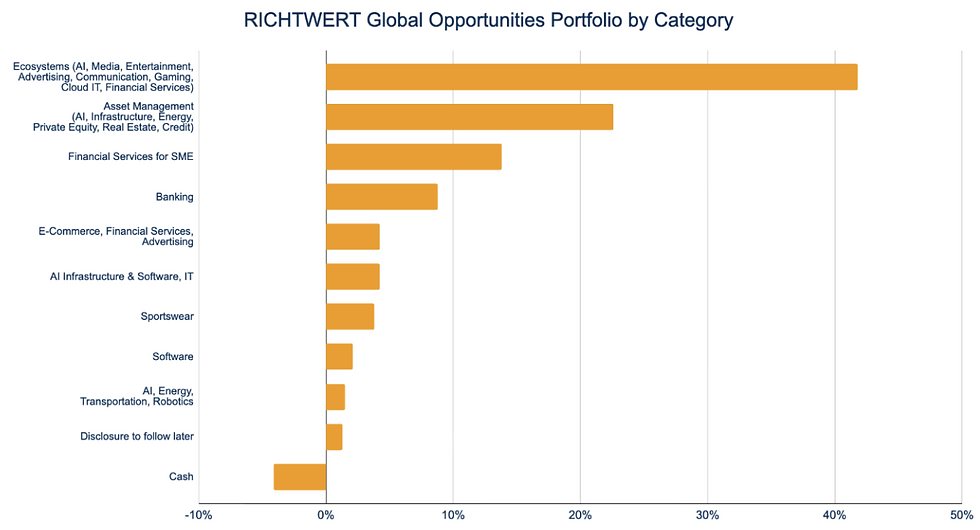
Chart 5: RICHTWERT Portfolio Composition by Category, end of May 2026
You may recall that I contrasted the AI era as very capital intensive as opposed to the Internet era, which was very capital light. To protect us from the risk of rising interest rates in a world becoming more capital-intensive, I have been careful to ensure our businesses are relatively capital-light and/or can benefit from potentially higher interest rates. In fact, around 45% of our investments (these include Asset Management, Financial Services for SME and Banking) are in businesses that finance consumers or businesses and have the potential to benefit from higher interest rates.
Finally, by insisting on a margin of safety and only investing in those businesses that are attractively valued, I believe the prices we paid more than reflect potential risks, giving us attractive upside potential should they manage to put their advantages to work.
In Closing
In closing, I want to share an anecdote with those who think we should stop the progress of AI or innovation in general because it endangers jobs and society:
Those skeptical of progress often focus on short-term protectionism rather than a lasting solution. This reminds me of Professor Milton Friedman, who, while traveling overseas, noticed scores of road builders moving earth with shovels instead of modern machinery. When he asked why they weren’t using tractors and modern road-building equipment instead of so many laborers, his host told him it was to keep employment high in the construction industry.
Friedman inquired: Then why don’t you give them spoons instead of shovels and create even more jobs?
Don’t get me wrong. AI, like any other innovation, requires responsibility and foresight. However, wishing away change and progress is not the solution; making them work for society is.
Those who know me know that not a day goes by when I am not thinking about how the world is evolving and how we are positioned to make our contribution while earning our fair share. I am lucky that this passion of mine has never felt like work.
I can guarantee nothing except that I am in the same boat with you and that I will only earn something if I deliver for you. Nearly my entire net worth, and that of my family, is invested in the same businesses we own together and RICHTWERT only earns if you earn more than 6% per year.
I have no doubt that there are investments that will perform better or worse than ours, but I sleep well at night knowing our capital is invested in businesses I understand and can value and that they have a high probability of firstly protecting our purchasing power and secondly growing that purchasing power reliably over time.
With great respect and appreciation for your trust, I wish us all the best for the years and decades ahead and look forward to answering any questions you may have.
Sincerely yours,

Bahram Assadollahzadeh, CFA®
June 8th, 2026
Footnotes:
1) I use gross instead of net performance here on purpose to compare that with their underlying business performance.
2) At RICHTWERT, I generally do not hedge currency exposure unless hedging can be done inexpensively because the beauty of being invested in productive assets such as good businesses is that they can adjust prices when currencies devalue. This may not happen as fast as currencies move but it does happen over time.


Comments